Temperature Rise & Aging Bench Test Analysis for Interchangeable Plug Power Adapter
1. Temperature Rise as Core Reliability Metric for Interchangeable Plug Power Adapter
Commercial hardware often runs inside sealed cabinets or hot workshops with elevated ambient temperature. Components inside the Interchangeable Plug Power Adapter and plug terminals generate heat. Temperature rise controls component aging rate, plastic lifespan and safety margin. Many manufacturers test only bare main units without plugs, producing irrelevant thermal data.
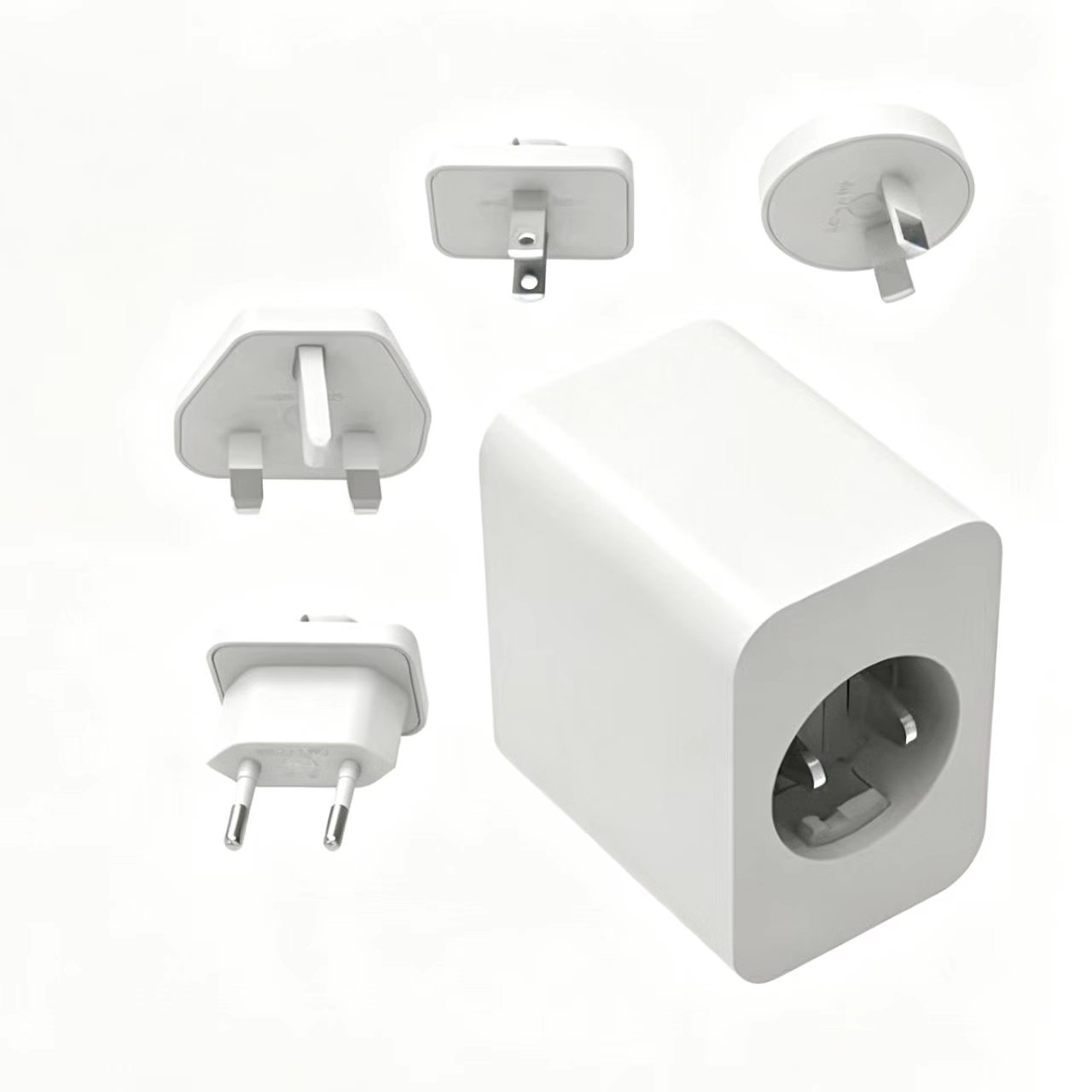
The junction between plug and main body is a hot spot. Contact resistance at terminals creates extra heat. The assembled Interchangeable Plug Power Adapter usually runs hotter than the standalone main unit. Relying only on bare-unit thermal data leads to unexpected thermal shutdown in overseas field deployment.
Temperature rise is also a mandatory safety test item. Safety certification measures temperatures across the complete loaded Interchangeable Plug Power Adapter and verifies temperatures stay below material limits. Exceeding limits results in certification failure.
2. Standard Thermal Test Workflow for Interchangeable Plug Power Adapter
Thermal testing runs inside a temperature chamber simulating maximum ambient temperature of target markets. Assemble the Interchangeable Plug Power Adapter with matching plugs and connect rated load. Run continuously until temperature stabilizes. Place thermocouples on key spots: transformer, MOSFET, output capacitor, metal plug terminals and latch plastic.
Log temperature readings at each point. Temperature is stable when hourly change stays below 1℃, then record final temperature rise. Compare readings against material temperature limits to judge pass or fail for the full Interchangeable Plug Power Adapter.

Common supplier mistakes: short-duration test, no fitted plug, under-rated load. These methods produce artificially low temperature readings and cannot reflect real-world performance of the Interchangeable Plug Power Adapter.
3. Root Causes of Excessive Temperature Rise
First, high contact resistance of plug terminals. Poor plating or insufficient latch pressure increases contact resistance and creates continuous heat, raising terminal temperature of the full Interchangeable Plug Power Adapter.
Second, inadequate thermal design of the main unit. Poor power component layout and limited internal space cause fast temperature rise under full load.
Third, low thermal conductivity of plug plastic traps heat at the assembly joint.
Fourth, insufficient power margin; operation near rated power amplifies heat generation of the Interchangeable Plug Power Adapter.
4. Combined Accelerated Aging & Thermal Monitoring
Accelerated aging runs the Interchangeable Plug Power Adapter under high ambient temperature and rated load for extended hours, while continuously tracking temperature rise. Terminal oxidation and plastic deformation during aging shift contact resistance and gradually increase temperature. Re-test temperature rise after aging to predict long-term stability.
Temperature drift after aging is critical to estimate service life of the Interchangeable Plug Power Adapter. Large temperature rise after aging indicates high long-term overheating risk, unsuitable for 24/7 commercial operation.
5. Thermal Optimization & Rectification
If temperature exceeds limits, implement corrective actions: improve terminal plating and latch pressure to cut contact resistance; optimize PCB layout inside the main unit for better heat dissipation; reserve sufficient power headroom to reduce steady-state heat. After revisions, re-run full thermal tests on the complete Interchangeable Plug Power Adapter to verify improvements.

During mass production, sample batches of the Interchangeable Plug Power Adapter for thermal spot checks to prevent temperature drift caused by material variation.
Conclusion
Thermal evaluation of the Interchangeable Plug Power Adapter must be performed on full assemblies with matched plugs, not bare main units. Multi-point thermocouple measurement at thermal steady state paired with accelerated aging tests reveals real heat performance of the Interchangeable Plug Power Adapter under hot commercial conditions. Detect defects of terminals and thermal design early to avoid field thermal shutdown. If you need thermal and aging evaluation for Interchangeable Plug Power Adapter, Sen Shu Qiang provides full test data and custom thermal optimization solutions. Contact us for discussion.